
Head of Creative

Civil engineering work is won through frameworks, pre-qualification questionnaires and tenders. A website will not win one of those on its own. But it is where the people scoring you go to check what you have said. A site that backs up your submission helps. A thin or dated one makes an evaluator wonder what else is thin.
Show the evidence first
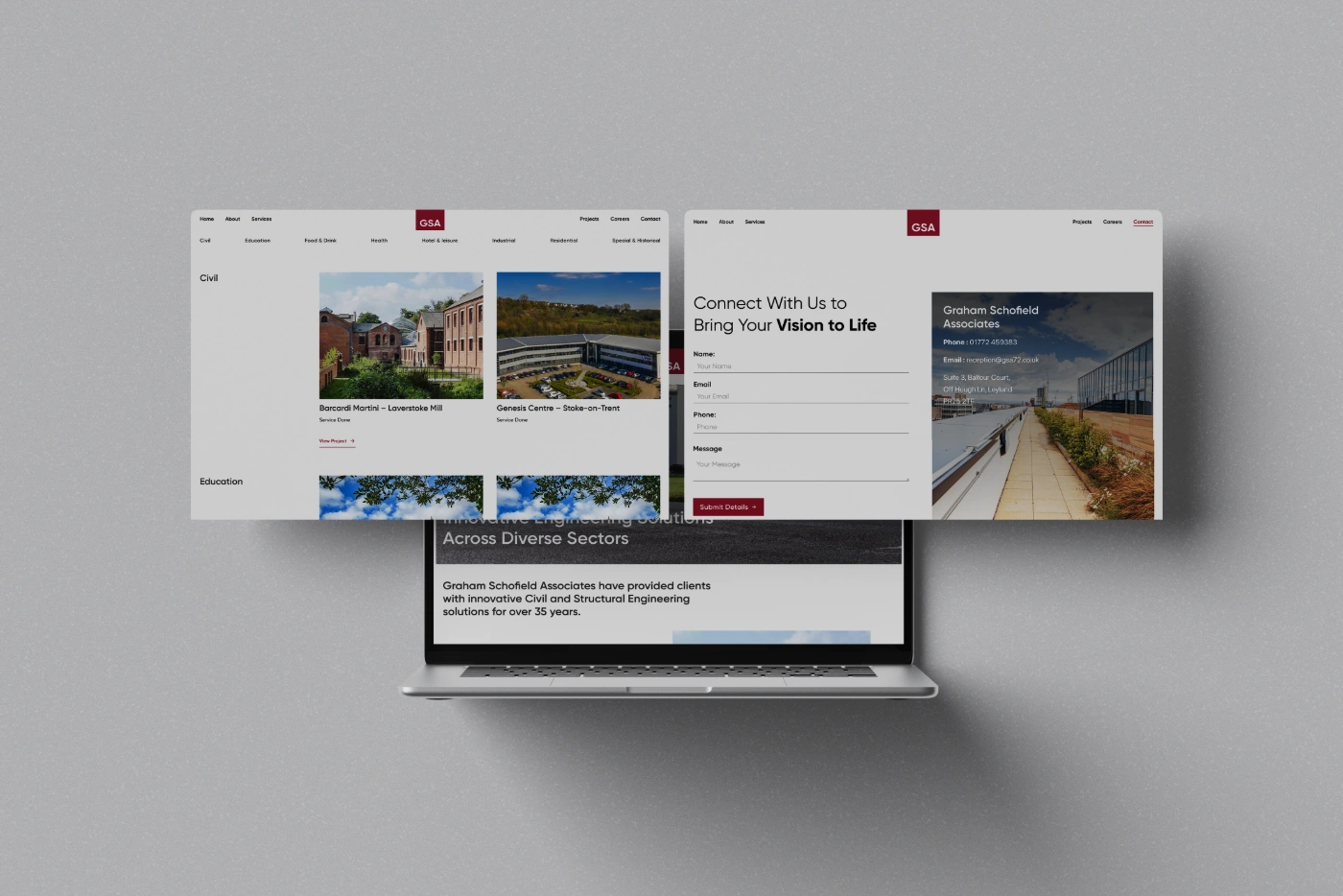
Project pages do more work than any other part of the site. Think of each one as a short reference. An evaluator wants to see the client, the location, the scale, your role, the programme and the outcome. If you cannot share a figure, say what you can: the type of structure, the stage you were involved in, the constraint you worked within.
Build case studies, not galleries. A grid of photos with no context does not answer any of the questions on the scoring sheet.
Make your capability easy to find
A visitor should know within one screen what you do and which sectors you serve. Group your services by what a client is buying, not by how your company is organised internally. Say which regions you cover. If you work on frameworks, say so.
Put your credentials where people look
List the accreditations and memberships you hold, and link to the certificates where you can. Health and safety, quality and environmental credentials are routinely checked at pre-qualification stage, so give them their own clear place rather than burying them in a footer. Only list what you hold and can evidence.
Name the people
Bid teams like to know who they would deal with. Show your directors, your technical leads and the people who run delivery, each with a name, a role and a photograph. It also shows the business is stable and has depth, which is part of what a tender evaluator is trying to judge.
Work on a phone, load quickly
Site managers and clients often check a supplier on a phone, sometimes on a poor signal. If your site is slow or does not fit the screen, it reflects badly on how you run a project. Compress images, keep pages light and test on a real device.
Give a clear next step
Do not make a procurement lead hunt for how to reach you. Put a contact route on every page, with a named person where possible, and offer a downloadable capability statement if you have one.
Mistakes we see most often
The same few problems come up again and again on engineering sites. The project list stops three years ago, because nobody owns updating it. The capability statement exists only as a PDF that nobody can find. The photos are stock images of hard hats rather than the firm's own work. The contact details are buried, or point to a general inbox that nobody checks quickly.
None of these is hard to fix, but each one tells an evaluator something about how the firm runs. A site that is current, specific and easy to use suggests a firm that is organised. That impression is worth more than most people expect, particularly when two bids score closely on price and technical response.
Keep it current
A website is not a one-off job. Agree who is responsible for adding each new project, update accreditations when they renew, and review the whole site at least once a year against your latest tender submissions. If your bids describe capability that the site does not mention, close the gap.
What we have seen work
DRS Engineering is a specialist UAE-based engineering consultancy working in technically complex environments. They had complex, technically demanding work and a presence that did not show it. We rebuilt the identity, messaging and positioning, developed a new website and launched a digital campaign. They now hold up in front of larger, more strategic clients, and the result we publish is qualified leads up 210% in twelve months.
Venus Engineering is a Dubai-based engineering and contracting company specialising in construction, concrete repair and structural rehabilitation. The brand had aged badly. We built the strategy and evolved the identity into a modern, scalable system that keeps the heritage. The result on the Venus case study is a tender win rate up from 18% to 31%.
Test it as an evaluator would
Before you finish, sit down with your latest tender submission and your website side by side. Pick three claims in the submission and try to find the evidence for each on the site. Time how long it takes. Do the same on your phone. Then ask someone outside the business to find your accreditations, your last three projects and a way to contact a named person, without any help. Where they struggle, a bid evaluator will too. Fix the biggest gaps first, and repeat the exercise whenever you write a major bid.
A short checklist
- Every project page names the client, location, scale, your role and the outcome.
- Services and sectors are clear on the first screen.
- Accreditations are listed, current and easy to find.
- Directors and technical leads are named and pictured.
- The site loads quickly and works properly on a phone.
- Every page has a clear way to get in touch.
If your site does not tick these boxes yet, talk to Just Chill about what to fix first.